

Telemedicine or House Call in Maryland: Which One Is Right for You?
Some days, getting medical care feels simple. You book the visit, drive to the office and talk to the doctor. Done.
Other days, not so much.
Maybe the heat outside is too much. Maybe you are caring for an aging parent and getting them into the car feels like a full project. Maybe you have work, children, limited transportation or a chronic condition that makes travel harder than people understand. That is exactly why telemedicine and house calls still matter so much.
At The Doc’s Here, care is not built around one fixed way of seeing patients. Some people need a secure video visit from home. Some need a doctor who can come to them. Some need both at different times.
The real question is not which service is better. It is which visit fits your health need today.
What Is Telemedicine?
Telemedicine is a virtual doctor visit through your phone, tablet or computer. You speak with Dr. Azra Hussaini from the comfort of your home, office or another private place where you feel comfortable talking.
For many patients in Maryland, telemedicine makes primary care easier to reach. It helps when you need medical advice but do not want to sit in traffic, take extra time off work or wait in a clinic when you already feel unwell.
Telemedicine can be useful for follow up appointments, medication questions, minor sick visits, prescription refills and ongoing support for chronic care management. It also works well for patients who feel more relaxed discussing mental health concerns from home.
There is something honest about it. You are in your own space. You can talk openly. You do not have to rush out the door.
What Is a House Call?
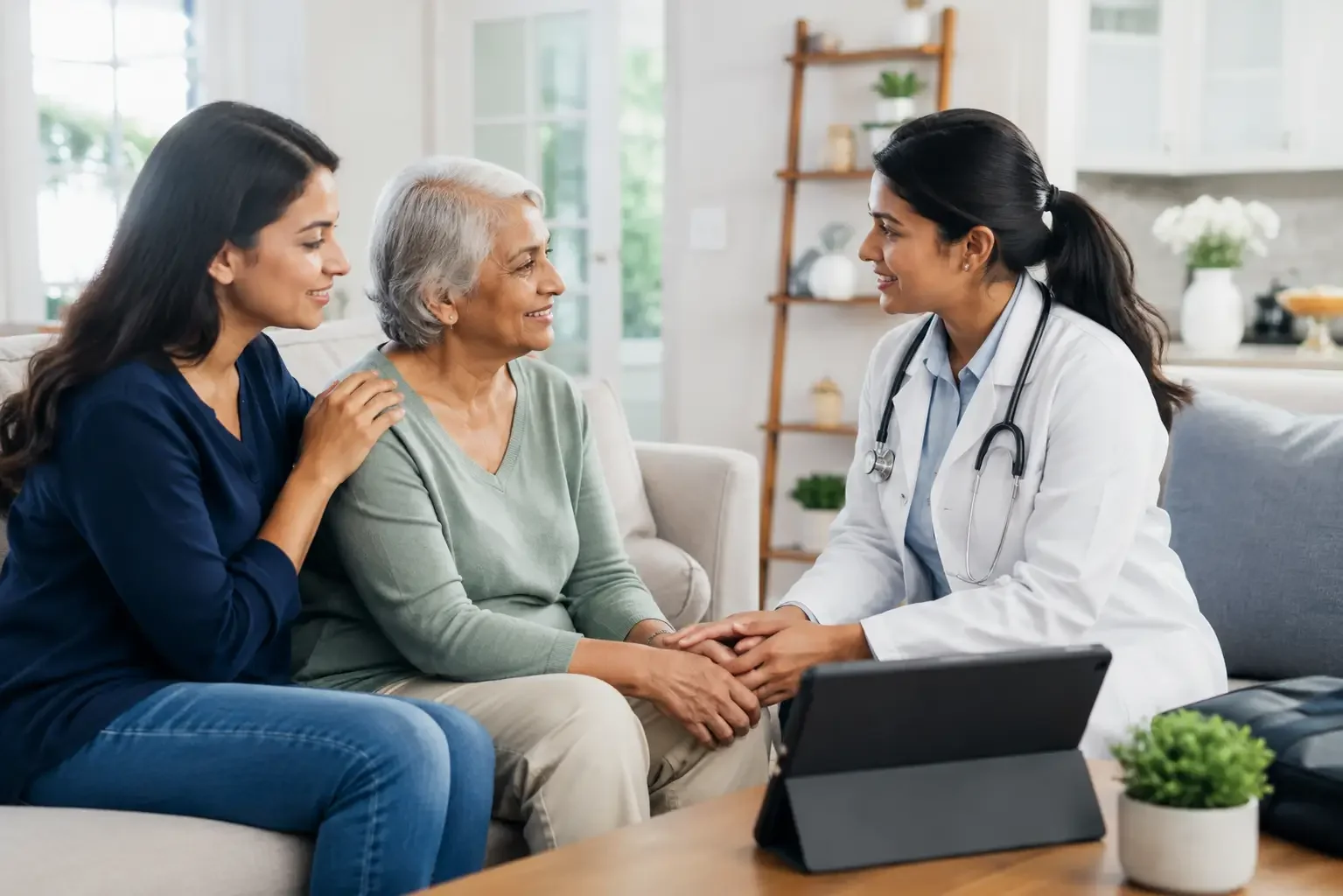
A house call is a medical visit where the doctor comes to your home or care setting. This may include a private residence, assisted living facility, nursing home or hospice care home.
House calls in Maryland are helpful for patients who are homebound, older, weak, recovering from surgery or living with a condition that makes travel difficult. They are also useful when the doctor needs to understand the patient’s real daily environment.
That part matters more than people think.
A home visit can show things an office visit may never reveal. Is the patient moving safely around the house? Are medications being stored properly? Is there enough support? Is the home too warm? Are they eating well, drinking enough water or struggling quietly?
House calls can make care feel more personal because the doctor sees more of the full picture.
When Telemedicine Makes More Sense
A telemedicine appointment may be the better choice when your concern can be safely discussed through video and does not require a hands on exam right away.
It may help if you need:
• A follow up visit after a previous appointment
• A medication review or refill discussion
• Guidance for mild symptoms
• Support for anxiety, depression or stress
• Chronic condition check ins
• A conversation about lab results or next steps
Telemedicine is especially helpful during hot Maryland days when travel itself may feel draining. Older adults, patients with mobility concerns and people managing long term conditions may benefit from care that does not require leaving home.
Still, telemedicine is not for every situation. Chest pain, severe shortness of breath, fainting, confusion, signs of stroke or serious injury should be treated as urgent or emergency concerns.
When a House Call May Be Better
A house call may be the right option when the patient needs closer observation, has trouble traveling or would benefit from a medical review inside their own living space.
House calls may help with chronic care management, wellness exams, acute concerns, medication review, recovery support and care for older adults.
For families, this can be a relief. Instead of arranging transportation, helping someone down the stairs and hoping the whole trip goes smoothly, care comes to the patient. That can remove stress before the visit even starts.
It also gives loved ones a chance to explain what they have noticed. Small changes in appetite, mood, walking, sleep or memory can mean something. A doctor house call gives room for those details.
Telemedicine and House Calls Can Work Together
Many patients do not need to choose one forever. They may use telemedicine for follow ups and house calls when a more personal review is needed. That blend can be very helpful for chronic care.
For example, a patient with high blood pressure may have a telemedicine visit to review readings and medications. Later, if symptoms change or home safety becomes a concern, a house call may give a clearer view.
Good care should adjust as life changes. Some weeks are simple. Other weeks are not.
Why Patients Choose The Doc’s Here
The Doc’s Here offers telemedicine, house calls and in office visits with a patient centered approach. Dr. Hussaini takes time to listen, understand the concern and address what matters most to the patient.
The care is personal, inclusive and practical. It is not rushed. And for many patients, that alone changes the whole experience.
Frequently Asked Questions
-
Yes. The Doc’s Here offers telemedicine care for patients in Maryland with virtual care also available in New York and Virginia.
-
In many cases, yes. Dr. Hussaini can review your symptoms, medical history and current medications then decide what is medically appropriate.
-
House calls may help homebound patients, older adults, people with limited mobility, patients recovering from surgery or anyone who finds it difficult to travel.
-
No. House calls can help patients of different ages depending on their health needs and situation.
-
Call The Doc’s Here at 667 218 3500 or request an appointment online for telemedicine, a house call or an in office visit.
